Showing posts with label Summoning. Show all posts

Sunday, August 27, 2017

Familiars


A while back, I was thinking a lot about summoning. My complaint was that monster summoning spells in D&D were incredibly bland, and I proposed an alternative system that involves performing rituals out of black grimoires to bind specific entities. But besides monster summoning spells, you know what other spell ought to be incredible, but sucks in D&D and its variants? Find Familiar.

This fact has been well documented. As written in AD&D, having a familiar is pretty much just a way to boost your hit points. Besides this it gives on only some very mild bonuses to perception. In short, the effects amount to a bland buff. Also, a few special familiars aside, they are just generic animals: toads, cats, etc. This is unconscionably boring. Some more powerful and flavorful familiars have been proposed as fixes, for example by James Beach here, and in an article from Fight ON! #10 by James Smith. And then there's this flavorful table of animal familiars from +Tom Fitzgerald at middenmurk. But I hunger for something more. It occurred to me the other day that I might be able to appropriate some amazing older posts about summoning written by other folks in the blogosphere to save find familiar from the milquetoast hell in which it languishes.


When I first read them, I was fascinated a series of posts that create a summoner by taking a class and replacing its spell slots with summoned spirits. First, there's this post containing the basic idea, and this excellent post providing a list of spirits, both by +Jack McNamee  of rottenpulp fame. Then, following in his footsteps, there are some posts by +Mateo Diaz Torres of gloomtrain, the most developed of which is "but I repeat myself".

McNamee's idea is that for each spell slot you would have (as a cleric), instead of a spell you get to bind one spirit of the relevant level. These spirits generally do one or two things. The baby ifrit can light fires; the spectral hound can track infallibly and its howl causes fear; that kind of thing. You then command the spirits to use this power (or do whatever) at will by rolling command checks. Too many failures and you increase your chance that the spirit will break its bonds and run amok. Mack's list of spirits is evocative, and there are nice touches throughout. (Look at his rules for healing oneself by bleeding a familiar. Or the Dead King.)

Diaz introduces a new class, called "summoner". The summoner starts with a pact with a 1HD spirit who is able to cast a first level spell. Every time the summoner goes up a level, he can either increase the HD of a spirit he already has bound, tricking it out with more spell powers in the process, or go find a new fledgling 1HD spirit to bind in addition. The spirits are unique, scalable individuals. He presents two wonderful examples with the sort of setting specific awesome flavor I've been after. There's a bit of Shakespeare's Prospero and Ariel here, with the summoner binding named spirits, with whom he develops a history, and grows over time. But, of course, this is wedded to the demonic freakiness and unshackled imagination that gloomtrain everywhere traffics in. It's really kind of amazing.


While I have my own rules for summoning, I am wondering if we couldn't use the McNamee/Diaz approach to fix familiars. Find familiar already functions pretty much in the McNamee style. By choosing a spell you use only once, you effectively sacrifice one spell slot in exchange for having a permanent familiar bound to you. It's true that the slot you sacrifice is the less valuable spell known slot, instead of the more valuable spell per day slot. But suppose we wanted to ratchet up the awesomeness of having a familiar. Then it might make sense to require the sacrifice of the more valuable kind. (It also has a kind of logic in the shared bond you have with your familiar. You draw power from it, and it takes power from you.) The longterm relationship between a wizard and his familiar also lends itself to the kind of developing history that Diaz's unique bound spirits evoke. You should have a history with your familiar, perhaps a fraught relationship, and I like the idea of your familiar growing in power with you.

So what if the mechanics worked this way? In order to acquire a familiar, one must perform the ritual necessary to bind the familiar to you. (Some of these are widely known, others found only in certain moldering tomes.) This involves sacrificing a first level spell slot. When one acquires access to a new level of spell, one has the option to sacrifice a single higher level spell slot to increase the power of the familiar. To get to each successive step, you would have to have completed all the prior ones. So, for example, when I'm a second level wizard I sacrifice one of my two first level spell slots to bind a familiar. When I'm a fourth level wizard with 2 second level spell slots, I might choose to sacrifice one of these permanently to increase the power of the familiar I acquired by one step. This proposal would, in effect, allow one a la cart use of Diaz's summoner class. It would have a different mechanical basis than my summoning, since it wouldn't work via the use of a monster summoning spell. Ideally, it would have a different flavor too: it would be less calling on pacts with demons and cosmic horrors and more the sort of Prospero and Ariel thing.

Here are two examples. The first is an enslaved fairy familiar, influenced by McNamee's rules on bleeding familiars and his blight lamb, and especially by Jack Vance's Lyonesse books. The second is an ancestral spirit familiar inspired by James Beach's post linked above.

Enslaved Fairy
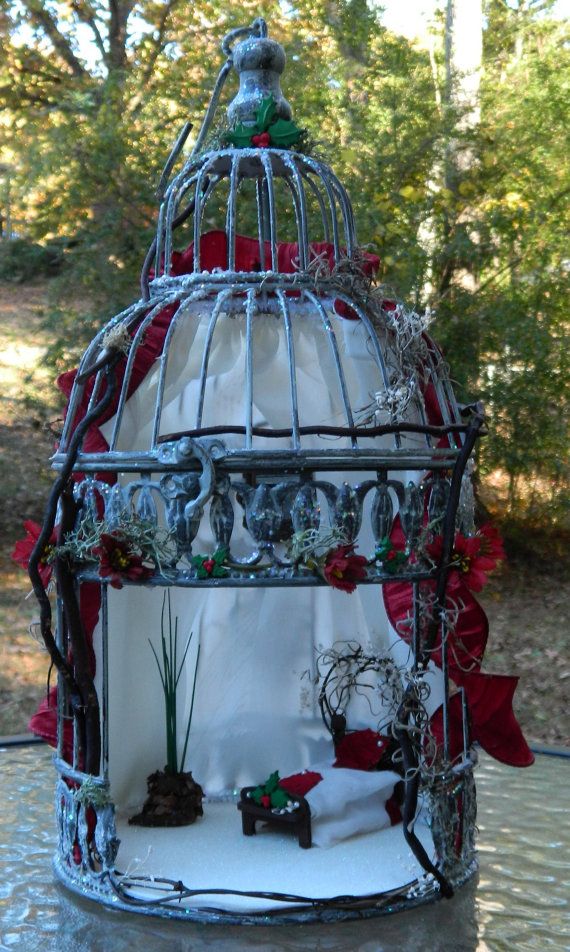


These familiars appeal to magicians with unwholesome appetites and meticulous habits. To acquire one, the magician must first craft a suitable habitation. This is usually a gilded cage of fine mesh bars, often decorated with doll's furniture (500-1000GP). Slightly larger than a lantern, it is often carried by a ring at the top, or over the shoulder hanging from a stick. The magician must also acquire one thing that fairies long for, such as delicate candied rose petals, or tears of laughter collected from a small child. He must also carry about his person something fairies dread, such as carpenter wasps, fiddler crabs, or heated needles.


The magician must then locate a fairy enclave. This is no easy task, as they are invisible to mortal eyes, and their location a closely kept secret. Near the enclave, the magician must situate the cage in a bucolic scene of great beauty that at once invites while nevertheless obscuring its confining nature. Placing the lure within, the magician then awaits his future familiar. Having secured a fairy, the magician must hasten away before alarm can be raised, or face considerable complications. Once at greater leisure, the magician may set about cowing the faery through firm application of the object of terror, until achieving an abject state of (temporary) compliance. At this point the captive familiar and the magician must mingle their blood to achieve a magical bond.


Freedom, Death, and Enmity


As the fairy moves through the stages of corruption and servitude, their relationship to captivity will change. At the early stages, the fairy will display pure hatred and fear of their master. They will escape at any chance. At later stages, when the magical bond is stronger and the fairy's corruption has progressed to a point where escape is no longer an option, they will still play malicious tricks, and sow unpleasant obstacles for their master. At its best, the relationship is one of dependence and spite. In some cases, even after a long captivity, they will bring ruin upon themselves for the sake of revenge.

Although the rewards bestowed by a fairy familiar are great, the escape or death of a fairy also represents a significant source of vulnerability for a magician. For Faeries are, being but slight creatures, not overly difficult to slay. Should this happen, the caster will lose the invested spell levels, regaining them, beginning with the 1st, at the rate of one spell level per session. A new bond cannot be formed with a captive for a year and a day.

Possessing a fairy is a vile transgression that marks one immediately as an enemy of all fairy folk. Should it come to their attention, fey will seek to free the captive and visit punishment on the magician. If a fairy should escape, the magician must take caution, for the reprisal will be terrible.

Powers of an Enslaved Fairy


Level 1: The enslaved fairy may produce either fairy fire or dancing lights once per day*. The fairy may also glow at will, illuminating as a lantern. At this point, the fairy is six inches tall HD1/2 AC5 MV3/15 Att: by tiny weapon (1hp) or spell-like ability.

Level 2: The enslaved fairy may either speak with animals or become invisible once per day. If the fairy's blood is drawn with a tiny syringe and consumed while they are invisible, the invisibility is transferred to the imbiber. Note that the bleeding causes 1d4 damage to the fairy (but never takes the fairy below 1 hp). As the bond grows stronger, the fairy grows to eight inches in height. HD1 AC5 MV3/15 Att: by tiny weapon (1-2) or spell-like ability.

Fairy, sans glamour
Level 3: The enslaved fairy may now either grow a toadstool into a spacious and exquisitely decorated abode (as Tiny Hut), or shrink someone (as reverse enlarge 5 levels higher than the magician) once per day. The magician may now also steal the fairy's glamour once per day, receiving +2 charisma for one hour and the ability to make a single lie utterly convincing. While bereft of their glamour, the enslaved fairy appears haggard and unappealing, like a toddler with the face of a drunken sot. By this time, the fairy has grown to one foot in height. Too large for a traveling cage, they are now usually kept on gilded chains. HD2 AC5 MV4/15 Att: By tiny weapon (1-3) or spell-like ability.

Level 4: The enslaved fairy may now bestow a curse of terrible luck on another (treat as Fumble) or bewitch the intelligence of man, calling up enchanted vistas (hallucinatory terrain) once per day. By this time, the fairy is two feet high, and has begun to take on a darker glamour. Should the fairy escape, they will suffer terrible withdrawal from the magical bond (save vs. poison or die). HD3 AC5 MV5/15 Att: By small weapon (1-4) or spell-like ability.


Level 5: The enslaved fairy may now summon a twisted unicorn from Fairyland at will to serve as the magician's steed, with a golden horn and milky black eyes HD6 AC2 ATT1-8/1-8/2-12 MV24 MR12. In addition, stealing the fairy's glamour now also allows the magician to sow discord between any two allies with whom the magician converses. At this point, escape seals the doom of the fairy and restraints are no longer necessary. The fairy is three feet high, with wings of black gossamer and dead eyes. HD4 AC4 MV6/15 Att: By weapon (1-6) or spell-like ability.

Level 6: The enslaved fairy may now either banish victims to the bewitched green hedge labyrinths of the Summer King (as maze) or, if the fairy knows their name, cause them to vomit forth their wits as a monstrous raven (as feeblemind) once per day. The fairy is now four feet high, and the gossamer of its wings begin to tatter. HD5 AC3 MV9/9 Att: By weapon (1-8) or spell-like ability.


Level 7: Once per day, the enslaved fairy may either reverse gravity or cause an object to vanish to fairyland (as Vanish), replaced by a perfectly shaped (momentarily!) simulacrum composed of clustered butterflies. At this point, the fairy's wings lie like a torn black cape from its back. Instead of flying, it may now stride through the air, and walk on walls and ceilings. It is now 5' tall, with a halo of darkness HD6 AC2 MV12/12 Magic Resistance 10% Att: By weapon or spell-like ability.

Level 8: The enslaved fairy may either call the enchanting music of the summer balls of the fairy court, which compels all to dance (treat as irresistible dance, 120' radius), or instill a mad and jealous love (mass charm) in those present once per day. When stealing the fairy's glamor, the magician may now appropriate the latter power, as well as the fairy's magic resistance. The fairy is now 6' tall with long and crooked legs like a deer. HD6 AC2 Magic Resistance 20% MV12/12 Att: By weapon or spell-like ability.


Level 9: The enslaved fairy may now call forth a doom of white roses once per week. Its snaking brambles and needled thorns grow outwards from a single seed at a rate of 100' feet per round, until reaching a desired radius up to 1000'. The doom will crumble buildings and break walls. Those swallowed by the surging thorns suffer 8d6 damage and are entangled. The enslaved fairy may also compel all those who enter into a bargain to execute the terms (as geas), but doing so places the fairy under a like compulsion. When stealing the fairy's glamour, the magician now appropriates the latter power as well. The fairy is now 7' tall, with eerily elongated features, and nails like iron needs. HD7 AC0 Magic Resistance 30% MV15/15 Att: By nails 1d12/1d12 or weapon or spell-like ability.

*When it says that "the enslaved fairy may do X or Y once per day", this means that the fairy may do one but not both of these per day. However, which of the two spell-like powers will be employed that day need not be decided in advance. This holds for the spell-like powers of theancestral spirit as well.


Ancestral Spirit


Not all familiars are drawn from the ranks of the living. To bind a spirit as a familiar, it must recognize in the sorcerer the bond of shared blood, the ties of familial sorrows and triumphs. In life the spirit must have had overweening ambition, a great unslaked desire that ties it to the earth, preventing its easy passage from the bright lands to Ushanpor, City of the Brass Sepulchre.

In preparation for the doleful performances that will bind the spirit, the necromancer must anoint himself daily with myrrh, and don the cerements of the grave, intoning in the Hymn of Opening the Sepulchres at the gloaming hour. If he is of the better sort, he must accustom himself to poring over family histories and genealogies, ferreting out old letters, gazing at dusty portraits, and most of all, lingering among the tarnished crests and moldy sarcophagi of his family tombs. If he is drawn from more humble stock, he may meditate on a simple object that has been passed down for generations--an anvil, clay pot, a sickle, or such--and wander amongst unmarked graves in the region where his family has dwelt. The spirit will seek him out in these melancholy perambulations. He will know that it is present when the temperature suddenly drops. At this point he must provide proof positive of his kinship by spilling a small quantity of his life's blood within a copper bowl. If the bowl is overturned violently, then necromancer in the presence of an unsuitable spirit, and must take precautions immediately to guard his life. If the spirit accepts, it will give an unnerving sign.


The DM must have some idea of who the ancestor was, including his chosen profession, and the nature of his ungratified ambition. The spirit will have been a remarkable individual in life, possessing unique talents, and a dangerous desire. Normally, this information will not be conveyed to the player. The identity of his familiar will be, for a long while, a mystery to him. You may roll on this chart if you like, or better yet, make something fun up.

Who is the Ancestral Spirit? (1d6):

  1. Disgraced, and cast out from the family for the murder of his brother, he rose through sheer strength of will from anonymity to lead legions of men into battle. He died ingloriously, with his breeches around his ankles. He is brutal and reckless, and holds his family (including the necromancer) in scorn. He wishes above all to draw the party into battle with implacable and awesome foes in order to win for himself the glorious death he was denied. (When embodied, treat as a fifth level fighter.)
  2. She was a great jewel thief who lost her life in failed theft of a priceless black diamond from the crown of Astyanax, the Lich King. She has irrepressible penchant for casual theft, including from her own party. She is spoiled but daring, and expects her family (including the necromancer) to cover for her crimes. Her great hunger is to carry through the bronze gates of Ushanpoor the black diamond for which she died. (When embodied, treat as a fifth level thief.)
  3. He was a zealot who untiringly preached his unwholesome faith. For the black crimes he committed in the name of his cult, he was rightly burned at the stake. His family members never speak of him, and are ashamed and afraid of his legacy. But there are some in the family who have secretly continued his work and await his return. He is dogmatic and evil, relishing open blasphemy and spurning eternal rest to continue his (un)holy work. (When embodied, treat as a fifth level monk.)
  4. He was a scheming merchant who sought endless wealth through unscrupulous means. He schemes always after filthy lucre and seeks revenge against the wealthy descendants of the merchant who poisoned him. He is a master of commerce and knows all the ruses and stratagems of the merchant's guild and others. He was either betrayed by a family member (if the family is wealthy), or by a clan that is high (and mighty) in the ranks of the merchant's guild. He is crafty and cruel. (When embodied, treat as a level fifth level merchant.)
  5. He was a scholar who worked to uncover hidden and terrible secrets. He was infected with white buboes by grave wrappings and lost his life on the verge of uncovering the terrible antedeluvian prehistory of man. He still hungers for arcane knowledge, and is desperate to reach the library vaults of the Yuan-ti, where the secrets he craves are kept. He is didactic and obsessive. (When embodied, treat as a fifth level sage.)
  6. He was a con man, with a love of the art. On the verge of pulling off the greatest racket of all time, he was hung for impersonating the prince. He tells endless tall tales, and will fleece respectable persons. He is dishonest but irresistible, and has a desperate desire to rule on the throne in a stolen identity. (When embodied, treat as a fifth level mountebank.)  


Killing the Ancestral Spirit


While in spectral form, the ancestral spirit cannot be harmed by weapons or (most spells). Even if slain when embodied, it will simply manifest again in a weeks time. The ancestral spirit may be permanently slain only through an exorcism spell. Should this happen, the caster will regain the lost levels of spells invested in the spirit, beginning with the 1st at the rate of one spell level per week. It will also vanish if it is ever able to fulfill its uttermost wish. For this reason, the ancestral spirit is likely to conceal the true nature of its desire. The ancestral spirit will likely remain to pursue its own agenda if the caster is slain. 


Powers of The Ancestral Spirit


To acquire each level of power, the necromancer must give up one spell slot of the corresponding level. The powers can only be acquired sequentially.


Level 1: The ancestral spirit may manifest spectrally once per day, either as the spell jarring hand or manipulate fire.

Level 2: The ancestral spirit acquires a permanent presence, serving as a perpetual unseen servant. Once per day it may strike terror into mundane animals (horses, dogs, and the like).


Level 3: The ancestral spirit may possess a willing subject for 1 turn, once per day. During this time, it may use the possessed body to perform the sorts of feats they could when living, but cannot use its other powers. The ancestral spirit may also fuse with it's master to speak in a voice that echoes across the lands of the dead (treat as speak with dead), or produce a spectral gust of wind once per day.

Level 4: The ancestral spirit may reveal horrifying vistas of the land of the dead (as fear spell) or instill a slavering servitude in corpses (as animate dead) once per day. They may also possess someone willing for 1 hour per day. During this time they may perform the sorts of feats they could when living, but cannot use their other powers.


Level 5: The ancestral spirit may now open a great door into and out of the land of the dead (dimension door) once per day. They may also possess someone unwilling once per week. An unwilling victim gets a saving throw vs. spells to resist. The possession lasts up to one day and during that time they may use the possessed body to perform the sorts of feats they could when living. During this time, the ancestral familiar cannot use their other powers. A successful exorcism of the ancestral spirit now requires two clerics.


Level 6: The ancestral spirit may now may now pull unwilling living beings to the land of the dead (as death spell) once per day. They may also inquire among the dead for forgotten lore, but will be absent during the duration of this inquiry (as legend lore spell).  Finally, they may possess someone either willing or unwilling indefinitely, although unwilling victims get a new saving throw once per week. While embodied, the ancestral familiar cannot use their spectral powers.

Level 7: The ancestral spirit may now shine the light of the necromantic moon into the lands of living, sapping the life and vigor of all those upon it falls (as Power Word Stun 30' radius) once per day. At this point, it may also use its full menu of spectral powers while embodied. An exorcism of an ancestral spirit must now be led by a cleric of twelfth level or higher to have a chance of succeeding. 

Level 8: The ancestral spirit may now control undead as an evil cleric of half the levels of the necromancer it serves. It may also raise dead once per week, although those who return will be strange, and their alignment evil. Those who are unwillingly possessed by the ancestral spirit now receive a saving throw only once per year. It now takes three clerics to exorcise the ancestral spirit, of no less than twenty combined levels.


Level 9: While embodied, the ancestral spirit may now drain energy levels by touch. Those slain by this attack become faceless wraiths under the control of the ancestral spirit, with a maximum number of wraiths equal to the necromancer's level. Faceless Wraiths HD5+3 AC4 Att: 1d6+energy drain Silver or magical weapons to hit MV12. In addition, the ancestral spirit may now summon a vast wall of corpses 30' area per caster level once per week. Exorcisms of the ancestral spirit must now be led by a cleric of no less than sixteenth level.

Tuesday, January 21, 2014

The Fifth Circle

The Sapless Ones


The Sapless Ones are the shades of those who died alone and forgotten, left to rot without proper burial and funeral rites. Those who were cunning in life eventually win passage through the Verdigris Gate into Ushanpor, the great city of the Brass Sepulcher. There they slip from doorway to doorway, past desecrated temples, rank gardens, and silent bazaars to congregate listlessly with their kind in filthy courtyards, where they find brief solace in company with those who share their plight. Over time their memories fade, and with them their dreams, hopes, and personality. They remember only that they do not remember, and driven mad by a dull aching lack, they long for whatever would fill it. They lack substance, and although they are filled with an envious hatred of the living, they are desperate to serve those who can provide it.

To perform the ritual, the conjurer must find an individual soon to leave the bright lands of the living. He must of his own free will agree to bear the Fifth Circle to Ushanpor. It is inscribed on two twin copper coins, made using the same mold, which must be broken as soon as they are cast. These coins are left to molder in a container filled with the damp earth stolen from a grave, for no less than six moons. The conjurer must prepare his messenger as his end approaches, intoning powerful spells that bind him to his living purpose and uphold his resolve so that it may endure even in the Chambers of Forgetting. In the minutes before his death, the conjurer must place one of the coins in an incision under the messenger's tongue. Its twin must be worn about the chest of the conjurer at all times until the Sapless Ones are bound. 


Within a month, they will come, at a time and place of their own choosing. This will not be pleasant, as they press and crowd, whispering, hungry and malevolent, imploring the conjurer for his substance. They speak in Morkavian, the pickled tongue, gibbering language of the dead, in which the negotiations must be conducted.* (It can be learned from any of the grammars popular among necromancers.) The shades desire only one thing: to drink the most precious and vivid memories of the conjurer. Such memories will be lost to the conjurer forever, shared eagerly amongst the Sapless Ones as sustenance. After much sordid haggling over particular memories, an agreement will be reached. Then the Sapless Ones will claim their due. This is the moment of greatest peril for the conjurer, for in their thirsty press, their grasping hands will clutch at more than is their share. They must be held to a firm line, but this is no easy thing to do, even for seasoned necromancers.

Mechanics: The minimum level required for successfully performing this ritual is 11. When a PC performs the ritual of the Fifth Circle, his player should make a saving throw vs. magic with his eyes closed. The initial modifier for this roll is -2. If he is able to consult the great necromantic tome Within the Brass Sepulchre, he may add +2 to this roll. If he can raise spirits and has experience speaking with dead, or has studied under an accomplished necromancer, then he may add a further +2. 

Success: If the conjurer makes the saving throw, he may now summon 1d4 Sapless Ones using Monster Summoning III. Sapless Ones HD3+3 AC7 MV12 Att: grasp 2-5 + energy drain. (Note that their incorporeal grasp ignores armor for the purposes of striking.) If they succeed on a to hit roll, the victim must save vs. magic or lose a level and many precious memories permanently. If an individual is reduced to 0 hp or level, by a Sapless One, he rises in d4 rounds as a Sapless One under the power of the conjurer. At night or in shadowy places Sapless Ones receive +4 to surprise rolls. In daylight they receive +2. The conjurer may also employ Monster Summoning III in a more subtle way. If he can convince a victim to willing accept the copper coin used to summon the Sapless Ones, he may send them to torment and destroy the victim. They will usually haunt and terrorize the victim, slowly draining him of his strength, and memories over the span of a week. During this time they cannot be summoned by the spell. To employ them in this fashion is dangerous, since they often overstep the bounds of their instructions. And when they have fed deeply enough of the strength of the living, there is always the danger that they will assume the form of those they drained, and live a parody of life, passing for the once living victim that they now know so well.     


Obvious Failure: If the conjurer fails by 5 or more, the Sapless Ones press in upon him, jostling and shoving, grasping and roughly handling his inmost memories. Having drunk their due, they are not sated, and press for more in a mad scramble. The conjurer is overwhelmed, and they slake their thirst freely, drinking deep draughts from the conjurer's secret stores. In the first round, they drain 1 level. The conjurer must immediately make a save vs. magic at his new adjusted level. If he fails, the drain continues, losing another level the next round. The process is then repeated. When he finally bars the gates of his mind, the Sapless Ones flee, giddy with their new life and power. They will return later as a doppelganger of the conjurer, of whatever level they have drained from him. Using his memories and appearance, they will attempt to unseat him and usurp his life and power.

Subtle Failure: The Sapless Ones press in upon the conjurer, jostling and shoving, grasping and roughly handling his inmost memories. Having drunk their due, they are not sated, and press for more in a mad scramble. But the conjurer--so he believes--holds them to their allotted portion, and the ritual is a success. The Sapless Ones are bound as above. However, unbeknownst to the conjurer, they drank well above their share. To represent this fact, the DM should begin introducing things from the immediate and distant past that the conjurer does not remember. Start with small things. For example, perhaps upon returning home from the ritual the conjurer finds that someone has been tampering with his previously messy library, and has reorganized his books in a tidy fashion. Slowly more alarming consequences will become evident. For example, when casting each spell for the first time after the ritual, there is a 1 in 10 chance that it will be forgotten. In that case he must relearn the spell as usual. The DM should also feel free to introduce adventure seeds that build on the conjurer's forgotten memories. Perhaps someone whom the conjurer has never seen claims to be his old friend, or even his brother, asking for help. The conjurer has no memory of him, but he seems to know many intimate details that cannot easily be counterfeited. Perhaps he is who he says, perhaps not. Or alternatively, perhaps the conjurer finds himself mysteriously in possession of a coveted magical tome or artifact. Puzzled, but delighted, the player goes about his business. But in a month, a witch, demon, or sorcerer appears, incensed that the conjurer has not upheld his end of their bargain. And so on.


*Years ago, I read a wonderful post on some excellent OSR blog that described a gibbering language of the dead. (It may even have referred to it as the pickled tongue, although I doubt it.) Ever since then I've used it in my games. I tried to find the source to give it due credit, and even asked the great OSR hivemind on G+, but came up blank. If anyone knows, I would be glad.


Sunday, January 19, 2014

Textual Corruptions and Ritual Disasters


In any culture where books are copied by hand, textual corruptions abound. Where translation is involved, the problems are exacerbated. As anyone who does scholarly work with texts knows, even the best translations are problematic, and translations are not usually the best. While elsewhere this presents only intellectual difficulties, in books of summoning the perils are spiritual and physical. 

When making notes on the history of a magical manuscript, I like to include a percentage chance that a given editions will contain textual corruptions. For example, later editions of The Book of Six Circles are riddled with errors and have a whopping 75% chance of suffering from textual corruptions. Here's my technique for handling this. It involves several steps, but should take no more than 5 minutes of preparation in total. 

The Problematic Rituals table I present below should also be used to determine the results of trying to perform a ritual under adverse conditions, for example, when one does not possess the minimum required level to do so, or when the ritual is somehow tampered with, or interrupted.

Step 1: Is the Text Corrupt? 

Roll d100. If you get a number equal to or lower than the percentage chance for the relevant edition, the text is corrupted. Proceed to Step 2. (If you have not prepared anything in advance, you may assume as a rule of thumb that there is a 25% that a manuscript your players stumble upon contains corruptions.)

Step 2: How Many Rituals are Affected? 

Roll 1d4. This is the number of rituals suffering from a serious textual problem. Proceed to Step 3.

Step 3: Which Rituals? 

Assign each ritual in the manuscript to a single playing card. Shuffle these cards into a pile and draw the number of cards you rolled in Step 2. These are the corrupted rituals. Proceed to Step 4.

Step 4: Corrupted How? 

For each corrupted ritual, roll d20 on the Problematic Rituals chart below. That's what happens if the corrupted ritual is performed.

Step 5: Does the PC Notice? 

When the wizard begins studying the book, there is a chance that he will detect the corruptions. The DM should roll a d20. The target number is 20 minus (the wizard's intelligence bonus + 1/2 his level rounding up + bonuses for research). The research bonus can only be applied if the PC is has access to a library with related manuscripts: +2 for consulting other texts of summoning, +5 for consulting another edition of the very same text. If the number rolled is equal or higher than the target, the PC recognizes that the text is fishy. Depending on how much he beats the roll by, he may be able to identify what rituals in particular are effected. If he beats the target by 1-2 he definitively locates one such error. If he beats it by 3-4 he locates two such errors. If he beats it by 5 or more, he locates all of them. 


Problematic Rituals (d20)

1-4    Useless: When the conjurer goes through with the ritual, nothing happens. He feels like a fool.

5-8    More Difficult: The ritual functions, but helpful details have been omitted, irrelevant steps have been inserted, etc. The conjurer's saving throw suffers -2 in addition to other modifiers.

9-11   Much More Difficult: The ritual functions but contains drastic errors. The conjurer's saving throw suffers a -4 in addition to other modifiers.

12-14  Doomed to Failure: An essential step has been corrupted. The ritual functions but is automatically an obvious failure. 

15-17  That's Not What I Expected: The ritual works, but it summons something different hailing from the same region as the intended entity. The conjurer will have no idea how to bind or deal with this entity, and so his soul and body will be mortal danger. I provide some suggestions for such summoned creatures below. 

18       You Will Never Be the Same: Instead of summoning, the ritual briefly bends reality out of joint. During this time the conjurer's mind opens to visions from the plurality of worlds, and even beyond space and time. As a result, he is forever changed. Roll d4: (1) During his wanderings, the conjurer has become the carrier of a contagion that opens ones mind to the hateful alien intelligences that lurk in the interstices between worlds. The contagion is spread through the sharing of thoughts and emotions. The plague will follow him wherever he breaks bread or engages in earnest conversation. (2) During his sojourn among the many worlds, a terrible wisdom overwhelms his mind. As a result of this dark enlightenment, a baleful golden eye blossoms in his forehead. When the conjurer wishes to draw on this wisdom, he may open this eye. When the eye is revealed, everyone within 100' must save vs. death, including the conjurer. If he survives, he will receive the answer he seeks. (3) The mystical energies surge through the conjurer's body, perverting its natural purposes, leaving no cell or organ untouched. Roll once on  this transmutation table, or three times on this classic chart. (4) The conjurer is forever marked by what he has seen. Other wizards can see the abominations that press in on him, incessantly whispering in his ear, and recognize him for a dangerous, demon touched, fool. His manner becomes distracted, and his ideas increasingly strange. 

19     Opens the Way: As the ritual is completed, the fabric of reality rends. Blood runs from the conjurer's ears, and a searing light blinds his eyes. When his senses return, he can see (from one side only), what looks like a tear in reality, through which an alien landscape can be seen. This is a permanent two way gate to the place from which the conjuror was trying to summon a creature. At some point, entities will begin coming through. The players can also use it to travel in the opposite direction. This result should be a campaign changer, unless the conjurer can find a way to seal the rift he has opened.

20       Total Disaster: Nothing is summoned, but performing the ritual makes something truly terrible happens. Roll 1d4: (1) The conjurer becomes ground zero for some kind of radioactive, mutagenic, blight on reality. The end result is a sort of forbidden zone in which the rules of reality are bent and travel is toxic. The conjurer remains at the heart of the zone, as a bloated living manifestation of its corruption and disorientation. (His character is removed from play.) I would use this as inspiration for fleshing it out. (2) Raw magical forces flow, unchecked, through the space of the ritual. The conjurer must attempt to contain them or be destroyed. He must make a save vs. magic at -5. If he makes it, he is able to suppress the energies, containing them within his own form. He must now release the eldritch energies once per day as a kaleidoscopic bolt of shimmering energy, as per the lightning bolt spell, or explode. If he fails the save, his body is turned inside out and his organs are scattered about. These now function as unstable reservoirs of pure magical power. They may be harnessed for summoning and various other purposes alchemical purposes. (3) Roll once on +Logan Knight's That Which Should Not Be chart. (4) As the ritual is completed, a seemingly infinite series of doorways open, staggered and overlapping, as in a futurist painting. Before they close, d12 entities come through (you may simply use 1 of each creature from That's Note What I Expected below). They promptly engage in a cosmic battle royale, with one another and the conjurer.


That's Not What I Expected

Here are some suggested entities from the regions dealt with in the Book of Six Circles. Alternatively, the DM may use one of the "Special Forms" from the LOTFP Summon spell contained in the Grindhouse Edition, which can be downloaded here free. If the DM is feeling cruel, he could even generate a table using one of the "lesser" demons from the end of the Book of Ebon Bindings.  


From The Moon

Delano-Laramie

Slaver Squid 6 HD AC2 Move: 12' Attk: Tentacle/Tentacle/Tentacle d10/d10/d10 or inflict pain. Slaver Squids are cephalopods whose skin is colored like the starry night's sky. They have a mind that cuts like razors. Every other round, everyone in 100' must save vs. magic or take 3d6 damage and suffer paralysis for d4 rounds from the waves of agony that roll from them. Once per day they can also eject an inky darkness as per the spell. They work tirelessly to build an army of slaves from the many worlds, using them to erect a pearly ziggurat as a great memorial to their dead god. The Slaver Squid will try to enslave the PC and anyone else present and take them to the Ziggurat. [P.S. If you ever need lunar inspiration, see this fantastic series from Worlds of Ix. these encounter tables from Aons & Auguries are good too.]

From The Sightless Labyrinth

Stillenacht

Still Prelate HD7 AC2 Move: 12' Attk: By spell. Once per day: Darkness (x2), Cause Fear, Silence 15' Radius, Hold Person, Blindness (x2), Dispel Magic, Insect Plague, and Monster Summoning II (summons 1d6 Compass Worms). Still Prelates are gaunt figures. In the place of a face, a dense manuscript is set, supported by an elaborate iron cage drilled into their skull. They are silent and malicious figures, who revel in pain and suffering. When they cast spells, their manuscript flips open to the relevant page, and the runes inscribed thereupon glow green. They are able to command Compass Worms and other creatures from the Sightless Labyrinth. If summoned, they will attempt to take the conjurer back to their home, or, failing that, maim and disfigure him. Nothing is known about these strange figures. Perhaps they are spiritual leaders of the religion that prevails in the non-euclidean corridors of the Sightless Labyrinth; perhaps they are manifestations of the maze's hatred for life; or perhaps they are what remains of those who were banished there from the earth in earlier times, when men still knew how to open the ways to many worlds. Should they be slain, the manuscript may be extracted from their head. It contains the spells listed above, plus the ritual that binds Compass Worms. However, to consult this text, one risks madness. (I would use the rules on reading grimoires from Realms of Crawling Chaos.) 


From a Black Pyramid Turning in Space 

David Trampier


Cerebral Malice HD6 AC4 Mv 18' Attk: Claw/Claw + Special 1d8+3/1d8+3. These creatures are great hunters, able to follow the psychic signature of an individual who has passed through any terrain up to one week. Their hunger is great, and they receive their sustenance by absorbing the brain matter and psyches of intelligent creatures. When they do so, for d6 hours take on the voice and mannerisms of the one consumed. They otherwise not known to speak. Their method of attack is most disconcerting. In addition to their vicious claws, they are able to dominate the minds of men. Once per round, they may attempt to seize control of a victim who must save vs. magic at -2. If dominated, the individual will follow their every command. They can control up to four victims at once.


From the Unbidden Shores


Vothak HD8 AC1 Mv20' Attack: Claw/Claw/Claw/Claw/Bite d8/d8/d8/d8/d12 + Swallow whole. These pale, leathery horror hail from the lush white bowers of the Dangling Jungle. The offspring of Martian nightmares, they are well suited to their inverted home. Their sucker covered feat allow them to climb any surface, and they are comfortable in any orientation. They move with a brutal speed, and attack with four razor sharp claws. Most terrible of all is the bite of their massive maw, filled with needle like teeth. If a Vothak hits with a bite attack by 4 more than needed, he may swallow whole a creature of man sized or smaller. The harsh stomach acids of this fiend will do 3d12 damage per round, automatically. From within the stomach, one may only attack with medium sized weapons (longswords and smaller), but one need not roll to hit.

An Example

While adventuring in the Shattered Isles, Rackvim the Whisperer recovers a late edition of the Book of the Six Circles. The DM wishes to determine whether the manuscript has textual corruptions. For Step 1, he consults his notes and sees that such editions are usually riddled with errors, and have a 75% chance of containing textual corruptions. He rolls under this with a 55. He proceeds to Step 2, rolling a d4 for the number of rituals affected, and gets 3. The book contains six rituals, and so for Step 3 he shuffles an Ace, 2, 3, 4, 5 and 6 of diamonds into a pile. From this pile he draws an Ace, 4 and 6 corresponding to the rituals of the First, Fourth and Sixth Circles. These are the affected rituals. For Step 4, the DM rolls a d20 once for each ritual affected to see what kind of corruptions they have, rolling a 15, 6 and a 1. Consulting the table, he sees that the First Circle is Not What You Expected, the Third Circle is More Difficult (-2) to perform, and the Sixth Circle is Useless. The DM now rolls to see if Rackvim notices that anything is wrong. Rackvim is a smart cookie with an intelligence modifier of +2. He is also a fifth level wizard. Luckily, he also possesses a decent library with some other lesser texts on summoning. His target number for detecting the corruptions is: 20-(2 for int+3 for level+2 for related texts)=13. He rolls a lucky 16! Having succeeded by 3, he is able to identify 2 of the corruptions. The DM dices randomly to see which ones and rolls the Fourth and the Sixth Circles. The DM tells the player that once Rackvim digs into the manuscript, the text seems fishy to him in spots. In particular, Rackvim is pretty sure there are textual corruptions of some kind in the Rituals of the Fourth and Sixth Circles. The DM indicates to the player that there may or may not be further problems in other spots, Rackvim's not sure. The player is keen to perform the Ritual of the First Circle to bind Lunar Spawn and decides to proceed despite the uncertainty. Looking at the suggestions for That's Not What I Expected above, the DM chuckles: Rackvim will be in for a nasty surprise when he performs the ritual and ends up summoning a Slaver Squid! 

Wednesday, January 15, 2014

The Fourth Circle

[This is the second post describing the rituals contained in the Book of Six Circles. For an introduction to the book and the first three rituals click here. For my manifesto concerning summoning here.]


The Fourth Circle:
Threnody Crows
Illustration by Kora

Although it is found on no map, there is a land that borders all the waking worlds. It goes by diverse names: The Half-Remembered Kingdoms, Juxtaposition, The Unbidden Shores, Wishery, and countless others in tongues no man has ever heard. Within its perplexing and shifting geography, there are some places more than others where nightmares roost. The sand strewn isles of the Sea of Palimpsests is such a place. It is here that one may find the Threnody Crows that the Fourth Circle binds.

Threnody Crows are beautiful in the wrong way, with pearly white eyes, feathers black as midnight velvet, and the head of a crow. They wear rotting finery, and carry ornate instruments, usually stringed. They are great singers, for they have as many mouths as hopes they have betrayed, and their every note is thus a harmony. They are themselves formidable sorcerers, weaving great illusions through their dark threnodies that maze the minds of men and give substance to our nightmares. They are wise but fickle, and could never be bound, except that they rejoice in the novel sights of the waking worlds, and in sewing destruction and misery.

To perform the ritual of the Fourth Circle, the conjurer must inscribe the circle with the quill of a peacock strangled in his sleep. Within the circle he must place an assistant or bound captive, and induce in him a magical slumber. He must then light blue lotus incense and intone the proper evocations. When the smells and sounds enter the dreams of the slumberer, the Threnody Crow will hear the invitation. He will climb up through the slumberer and step into the circle. In a multitude of voices, he will first insist that he will serve only if freed from its confines. The conjurer must on no account agree to this, but he must have a counter proposal ready. Threnody Crows care nothing for wealth, power, or bound sacrifices. Instead, they wish to taste the wonders and vivid experiences of the waking world. The conjurer must thus present him with a truly wondrous gift from the waking world. The object need not have any value, although truly wondrous things usually do. If he is satisfied, he will accept service. But even then conjurer must be careful not to overuse him, or summon him for dull and boring tasks. 

Mechanics: The minimum required level to perform this ritual is 13. To perform the ritual, the player of the conjurer must roll a saving throw against magic with his eyes shut. The base modifier for the save is -2. Before making the roll, the DM should appraise the wonder of the gift on offer and adjust the saving throw accordingly. If it is utterly insufficient (e.g. a magical sword that glows in the dark) then the saving throw is automatically an obvious failure. If it is only somewhat wondrous (e.g. a jar of pink salt distilled from the tears of pixies), he should apply a penalty from -1 to -4. If it is superlatively amazing (e.g. an actual city shrunk to fit in a hollowed pearl), then he may apply a bonus from +1 to +4 as he sees fit.

Success: The conjurer may now summon one Threnody Crow with Monster Summoning IV. Threnody Crow HD6 AC5 Move:12” Attack: by spell. The Threnody Crow may cast at will: Invisibility, Darkness, Charm Person, Suggestion, Sleep, Improved Phantasmal Force, Confusion, and Fear. Once per day he may cast: Phantasmal Killer, Hallucinatory Terrain, Mass Suggestion, Mass Confusion. Note that the Threnody Crow who is bound is a particular individual. Should he be slain in combat, the ritual of the Fifth Circle must be performed again. Note also that he may only be safely summoned once per week. Should he summon the Crow more frequently, he risks (25%) angering the Threnody Crow. And woe to him should he summon the Crow within the borders of its native lands! 

Obvious Failure: If the player fails the saving throw by 5 or more, the Threnody Crow refuses the gift, and attempts to lure the conjurer within the circle. For example, he might express his contempt for the offering, and create the illusion that he is climbing back through the slumberer in disgust. Remaining invisible within the circle, he will then wait for the conjurer to enter to waken his assistant. Or he might reject the gift with disgust and use hallucinatory terrain to convince the conjurer that he has already transported him from the waking world to Juxtaposition as punishment, and then lure him into the circle with further illusions. Failing such ploys, he will simply use Mass Suggestion and demand the conjurer enter the circle, against which the conjurer must save at -2. If he succeeds, he will immediately whisk the conjurer away to the Half Remembered Kingdoms, depositing him in one of its slumbering hells. Roll d4 for location deposited: (1) The Dangling Forest: in an inverted white forest hanging from the underside of a jutting plateau, alien nightmares dreamt by the denizens of the Red Planet stalk their prey, (2) Isles on the Sea of Palimpsests: just below the surface of these haunted islands, there is another far more dreadful place that bleeds through, (3) In the labyrinthine back alleys of Zyan, the City of Porcelain Abattoirs, (4) The Canyons of Lost Souls: a series of seemingly endless connected grey slot canyons, with beetling smooth sides, and a dim and dreary light; there one should roll on this chart, for a start.

Subtle failure: After being offered the gift, the Threnody Crow seems dissatisfied and demands something dear to the conjurer in addition. If the player can't come up with something plausible quickly, the Crow will insist on an eye, or the thumb of his good hand. If the player refuses, the result will be an obvious failure as above. If he consents, the Crow will be bound as usual. However, within a month, the conjurer will have a disturbing and vivid nightmare. He will dream that he finds himself in a opulent but dilapidated hall. He stands within a magical circle composed of undulating wasps. From beneath a cowled hood, a multitude of voices chant a nightmarish incantation: "I bind you thrice. By the dim light of the Midnight Sun, I bind you. By the Black Mirror that shows no reflection, I bind you. By what you hold dear, willingly given, I bind you." The hooded figure will then pull slowly back the cowl and the laughter of a chorus of voices will echo in the hall as he raises the conjurer's additional gift. The conjurer will wake up in a cold sweat. Hereafter, he is bound to the service of the Threnody Crow in like manner. From time to time (say, every fourth session, perhaps in the middle of an adventure) he will find himself summoned to the Unbidden Shores and forced to serve the Crow as though summoned by a 13th level wizard. Should he try to extricate himself by summoning the Crow and trying to kill him, or intentionally put him in harm's way, the Crow will retaliate in kind. On no account will the Crow release him from service voluntarily. (This will provide the opportunity for the DM to insert delicious vignettes from the dream world into the game at his pleasure. It will also present serious challenges for resource management as the wizard suddenly vanishes and is returned 10 minutes later, drained of spells, seriously injured, etc.)

Tuesday, January 7, 2014

The Book of Six Circles


Original editions of the Book of Six Circles are bound in black leather. The cover is adorned with simple concentric circles in gold leaf, but is otherwise unmarked. The lettering within is elegant and distinctive, but not overwrought. The text is composed in a mix of ancient Ghinorian and Archival Script, the queer written symbolism of the Archivists. Original editions also contain invisible runes, crucial to the rituals of each circle, in the margins of the text. These appear only in the light cast by a candle fashioned from corpse tallow. Such editions are not protected by wards, unless these were added at a later date. Most original editions are incomplete owing to the ravages of time, although a few complete editions do exist. Later editions tend to be showier affairs, with illuminations and flourishes abounding. In these editions, Archival Script has been replaced by Ghinorian, and the invisible runes in the margin appear as a normal part of the body of the text. Such later editions often contain textual corruptions and dubious emendations (75%), as well as fierce magical wards (50%).

The Book of the Six Circles was compiled at the dawn of the age of the Sorcerer Lords by Virdalon, Master of Effulgent Prisms. Some of the rituals (certainly the Second and Sixth Circles, perhaps others) are drawn from ancient sources, now lost, that predate the First War of the Archivists. Virdalon seems to have been a scribe, a member of the order descended from the human servitors of the Archivists. Some elements (the Third Circle) are likely drawn from the potent and alien magic found in Archival sources. Finally, Virdalon no doubt had access to contemporary works, reflecting the innovations that were beginning to blossom during his time. The result of his compilation of these diverse sources is an arresting and unsettling medley. At the zenith of the Sorcerer Lords, the Book of The Six Circles was widely circulated. Owing to its popularity, it weathered the fall of the Sorcerer Lords. Although rare, a number of copies have passed into the libraries of the conjurers and demonologists of the present day. Presumably, others lie still undiscovered in the moldering tombs and rotting libraries of the Sorcerer Lords scattered among the Shattered Isles. What follows is a brief description of the rituals contained in a complete, original edition of this book. (For  my general approach to summoning, of which this is an example, see here.)

The First Circle:
Lunar Spawn
Gary Chalk
To the human eye, Lunar Spawn appear as billowing, incandescent clouds, coalescing momentarily into membranous wings and cerebral appendages. To the ear, the beating of their wings is the cracking of frozen panes of glass, their cry the chiming of bells. They bring with them the cold of empty voids, and the desolation of crystalline spires, rising without life or purpose from blasted lunar expanses into a perpetually black sky. They care little about the ways of man, although they are drawn like moths to the warmth of our life force and the integrity of our psyches. Unfortunately, the brush of their wings and the touch of their dangling appendages are deadly to the human psyche. It is largely owing to this that their service is valued. They also serve as potents guides should a conjurer know one of the hidden paths to the moon. 

Of all the entities discussed in the Book of the Six Circles, Lunar Spawn are the least difficult to bind. By the light of a waxing gibbous moon, the conjurer must paint an intricate circle of runes, using a blue pigment mixed with crushed chrysophate and tourmaline (200gp). He must prepare in advance a large, flawless fire opal (500gp). The evocator must cast a light spell on the eye of the fire opal. This will cause a strange pulsating light to shine forth from within the stone. He must then intone the Song of the Opening of Voids (contained in the text). The conjurer should be prepared, for when the void opens inside the circle, the temperature will drop in a single instant by 50 degrees or more. The lunar landscape will then be visible, as though glimpsed through a distorted mirror. His spirit will be drawn towards the void, but he must instead hold himself firmly to the things of this world and raise the pulsating fire opal up to the rift. The light shining from its eye will draw down Lunar Spawn. Once they have passed through the rift into the circle, they will become disoriented and frightened. It is then that the syllables of shackling must be repeated in rapid succession. As the syllables are intoned, they will become calm. When the syllables are finished, the Spawn will return through the rift, and henceforth be bound to the will of the conjurer as long as he holds the fire opal on his person. 

Mechanics: The minimum level for performing this level is 5. To perform the ritual, the player must make a saving throw vs. magic with his eyes shut. Given the ease of the ritual, the summoner receives +4 to this roll. This bonus can be increased by a further +2 if he has deciphered the Lunar Epiphany contained the third Puzzle Scroll. He may further increase the chance of success if he employs rare and exquisite crystals in the composition of the pigment with which the circle is painted (+1 for each 100 additional gp, up to +4). If, however, he has ever been to the moon, the temptations for his spirit to enter the rift will be overwhelming, and he will suffer a -4 on his save, effectively canceling the bonus for the ease of the ritual.

Success: If the saving throw succeeds, the sorcerer will henceforth be able to summon 2d4 Lunar Spawn by casting Monster Summoning I while holding the fire opal. HD1+1 AC6 Mv15" Att: Painful Touch 1d6 + a -1 on all rolls for 24 hours. These penalties are cumulative.  [Note that if Lunar Spawn are summoned on the moon, the spell has no duration. The Lunar Spawn will serve the conjurer until his departure or their death.]

Obvious failure: If the conjurer fails by 5 or more, then his spirit has been drawn through the rift and lost to wander the icy wastes of the moon forever. What is left behind is a mindless husk.

Subtle failure: If the conjurer has failed by 4 or less, the Lunar Spawn have been bound and the ritual seems to be a success. However, a crystal structure has begun to grow in the summoner’s brain, feeding on his vitality and life force. For each level gained, subtract 1 point from his constitution. At 0 con the summoner dies and becomes a crystal moon lich. The process is irreversible, and once underway, the summoner cannot increase his constitution through any means. The process does, however, come with some boons. At the 3rd penalty small crystal knobs protrude from the sorcerer’s skull and he may now use tenser’s floating disk once per day. At the 5th penalty these knobs have become small horns and he may cast levitation once per day. At the 7th penalty, they appear as the crystalline horns of a stag. The summoner can then draw on the psychic energy they store to create a wall of force. At the 10th penalty the horns have fused together into an enormous twisted crown, towering like a papal hat over his perpetually bent head. The summoner may now employ them to cast power word stun once per day. At 15th level, the weighty crystalline boughs sprouting from the summoner’s head must be supported by artificial means. He may now cast power word kill once per day. May it serve him well in his final days!

The Second Circle:
Compass Worms


Compass Worms are five feet in length. Their otherwise featureless head ends in a maw ringed by sharp teeth. They are filled with a hatred of sapient life and an uncontrollable lust for blood. They have an unerring sense of direction, and potent alien senses that allow the worm to “see” in darkness, and detect invisible or hidden creatures. Compass Worms dwell in a place the Book of Six Circles refers to as “The Sightless Labyrinth”.  Although the text is vague, it seems to be a place of claustrophobic darkness, in which cramped and twisting passages are laid out in a non-euclidean geometry. Various sources indicate that The Jade Litany contained a lengthy discussion of the Sightless Labyrinth and its queer denizens, along with the other black hells it notoriously treats, but it is now lost. Compass Worms are valued for their frightful force as guardians, and also by all those sorcerers who have reason to tread in twisting labyrinths or the dark places beneath the earth. 

To summon the Compass Worms, the conjurer must prepare in advance an ornate kris knife (500gp), and have a ready source of fire. He must then trace an intricate labyrinth in powdered blood and rust within a circle of runes. He then chants formulae that cause the labyrinth to lift from within the circle, unfolding before his eye in numerous dimensions. Using the kris knife, he must then spill the steaming life’s blood of a sapient being into a copper bowl, and place this bowl at the edge of the labyrinth. The worms will be drawn out of the labyrinth by the smell of fresh blood. As they approach, the sorcerer must heat the kris knife in the fire until it glows red. Once the first worms have emerged, the decisive moment in the ritual comes. The sorcerer must then move quickly to burn the first worm to approach the bowl with the red hot kris knife while intoning the words of command. If all goes well, the worms will then prostrate themselves before him and await permission to drink from the bowl. Once the sorcerer has given permission, and they have drunk, their will is bound to him forevermore. Should things go awry, the sorcerer is advised to protect himself against the rage of the worms by swiftly making the Mark of Vesh. This mark can only be learned in the Hall of Ivory Arches accessible through the third evocation from Evocations of the Doomed City.

Mechanics: The minimum level to perform this ritual is 7. The conjurer must roll a save vs. magic with his eyes shut to bind the worms. This save is at +0 initially. The conjurer may improve his chances by appealing to the hateful hunger of the worms by providing additional sacrificial victims. These must be intelligent creatures, bound defenseless near the bowl of blood. The summoner receives +1 for every two HD of bound sacrifice, up to a bonus of +4. Were The Jade Litany ever to be found, the summoner would receive +4 to his save by consulting the sections within on the Sightless Labyrinth.

Success: If the saving throw succeeds, the sorcerer will forevermore be able to summon 1d6 Compass Worms using Monster Summoning II. HD3+1 AC6 MV12" Att: Bite 2d4+1 Special: As soon as any of the worms tastes blood (does damage), they all enter a wild, thrashing frenzy, receiving an additional attack per round. They can see even in magical darkness, and detect invisible and ethereal creatures. They cannot be surprised.

Obvious Failure: If the conjurer fails his saving throw by 5 or more, 3d6 worms burst from the labyrinth in a blood frenzy. They attempt to slaughter all intelligent beings in the area. Should the conqueror make the Mark of Vesh and advance fearlessly towards them, the worms will cower in fear and be driven back into the labyrinth.


Subtle Failure: If the conjurer fails his saving throw by 4 or less, everything seems to have gone well, but the summoner has only a weak hold on the worms. With each summoning, there is a cumulative 1% chance that the worms will turn on the caster. When this result is rolled, treat it is as an obvious failure above. Once this has happened, it will happen every time the caster attempts to summon a Compass Worm.

The Third Circle:
Quiet Ones
A very obvious failure
(Russ Nicholson)
The Quiet Ones appear on our plane as long tangles of segmented legs and joints, ending in wicked hooks. They enter our reality by unfolding their twisted limbs and pulling themselves rapidly from the mouth of the summoner. Their name is doubly earned. For they move, strike and die utterly without sound. But their hooks are also covered in potent venom that is at once excruciating and simultaneously renders the victim silent as though subject to a silence spell. Their psychology is strange. At times, Quiet Ones seem to delight in rending flesh, although at other times they are stubbornly impassive, and move into battle only with goading. Owing to their superficial similarity to the Tessellated Carvers of the Archivists, some have speculated that Quiet Ones are one of their servitor races. What silent realm of agony they hail from is not known. They are favored by all those who seek to kill their enemies in silence, and are often mastered by those searching for a potent weapon to employ in a duel against other sorcerers. 

The ritual is exhausting and difficult. The evocator’s own body is to serve as the gateway and anchor for the Quiet Ones to enter and remain in this world. He must thus undergo rigorous preparations for the ritual, fasting for a full week, and clearing his mind through long meditations focusing on the bleak image of a black pyramid turning in space before a dying red star. The day of the ritual he must evacuate himself of all wastes, enter purifying bathes, and shave all the hair from his body. This last is important, since his skin is to serve as the medium on which the third circle is to be inscribed. These alien and intricate runes must be tattooed or burned into his flesh precisely by a master of the relevant craft. This is time consuming and painful. When the runes have been inscribed, the conjurer must begin the ritual immediately. He must repeat the magical formulae in a queer sing-song. As his body and mind open to the Quiet Ones, the moment of peril comes. For the process of becoming their gateway is unpleasant and wrenching, and they will attempt to overwhelm and colonize his mind and body. If he allows this to occur, it will spell his certain doom. If all goes well, the evocator will force the Quiet Ones from his mind and expel them from his body orally. Once they have been expelled, they will be bound to his service, much to their chagrin.        

Mechanics: The minimum level for successfully performing this ritual is 9. To perform the ritual, the player must make a saving throw vs. magic with his eyes shut. The base saving throw is -4, owing to the difficulty of the ritual. However, there are additional preparations that may tip the scales in the conjuror’s favor. If he studies the art of meditation for 1 month under an Agent of the Black Lotus, or a a high level monk, then he will receive a +2 bonus for the ritual. Should he have laid eyes upon the Lost City of the Archivists, and seen the runes inscribed on the obsidian gates that lie within, he will find himself with an intuitive grasp of the ritual that negates its difficulty (+4). (The book itself only vaguely indicates that this last is true.)

Success: The conjurer may now vomit forth 1d4 Quiet Ones with a Monster Summoning III spell. HD4+1 AC5 Mv15" Att: Claw/Claw/Claw 1d6 + save vs. poison or take 1d6 additional damage and be rendered silent for 1-4 turns. Special: owing to their unnerving silence, they are at +2 to surprise.

Obvious Failure: If the conjurer fails by 5 or more, his mind and body have been overwhelmed by the Quiet Ones. He must immediately make a save versus death -4. If he fails, Quiet Ones indeed arrive through his body—but not his mouth. He dies as their limbs burst from his torso and head. If he passes the save, they have only colonized his mind. His personality is now suppressed, and they will feign normalcy and proceed to use his person to commit foul acts of murder and savagery, especially against companions and loved ones. It is possible to expel his colonizers with an exorcism, provided someone with the requisite knowledge and fortitude can be found.

Subtle Failure: If the conjurer fails by 4 or less, the Quiet Ones appeared to have been successfully bound. In reality, they have acquired a slender hold on the conjuror’s mind and body, and are biding their time. Every time Quiet Ones are summoned, this hold grows stronger. Their goal is to turn the conjuror’s body into an open gateway for their kind. The 5th time they are summoned, and every time thereafter, the DM should roll a secret saving throw vs. magic for the conjurer. When he fails, the conjurer will vomit the Quiet Ones up—but will not stop. The second round, it will be as if the spell is cast again. On the second round, and every round thereafter, the caster gets a new saving throw vs. magic at a cumulative -2. Another failure indicates that more are arriving on the following round. If the cumulative penalty eventually makes it impossible to succeed at the saving throw, the caster has become an open portal and they will stream out for a full 24 hours, when the caster will expire from the strain. Quiet Ones who arrive in this manner are not under the conjuror’s control. They will seek to destroy all present, including the conjuror’s allies. If the conjurer should recover, they will attempt to destroy him as well. Should the conjurer survive, and be foolhardy enough to summon the Quiet Ones again, the result will be an obvious failure.

The Other Circles
may be found here:


The Sixth Circle